Best Infrared Saunas for Us-Built Construction in 2026
Four out of every five buyers now ask for documented US assembly on their next infrared sauna. Domestic production, tighter supply chains, and warranty support have moved from nice-to-have to the first filter on every shortlist.
By the end of this article you will know the three build details that separate durable US-made units from the rest, the exact specifications on SaunaCloud's Atlas and Sierra models, and the clear ranking of the three brands worth a final quote in 2026.
What to Look For in US-Built Infrared Saunas for 2026
Selecting a US-built infrared sauna for 2026 starts with verifying domestic manufacturing, independent safety certifications, and long-term warranty terms.
Domestic construction matters. Buyers should confirm cabinet panels come from North American mills using either clear-grade cedar or stabilized basswood. Cedar typically measures 3/8 inch to 1/2 inch thick, while basswood runs 1/2 inch to 3/4 inch. Either species should carry FSC or SFI chain-of-custody documentation.
Next, examine heater safety files. Look for ETL or UL listings plus FCC Part 15 compliance. EMF readings at the bench surface should sit below 3 milligauss.
Wavelength coverage comes in two main formats. Far-infrared panels stay within 5.6 to 15 microns. Full-spectrum systems add mid and near-infrared emitters that reach 0.76 to 5.6 microns for deeper tissue penetration.
Energy use affects operating cost. Most 2-person models draw 1.4 kW to 1.8 kW per session. Larger units top out near 2.5 kW. A single 45-minute cycle therefore runs between 1.1 kWh and 1.9 kWh.
Warranty length signals build quality. Seven-year coverage on heaters and five-year coverage on cabinetry is now common. Some makers extend to ten years when the sauna stays indoors and receives routine maintenance.
Checklist: verify North American cedar or basswood with documented thickness, and confirm ETL/FCC certifications plus seven-year heater warranty before purchase.
1. SaunaCloud - Best Overall
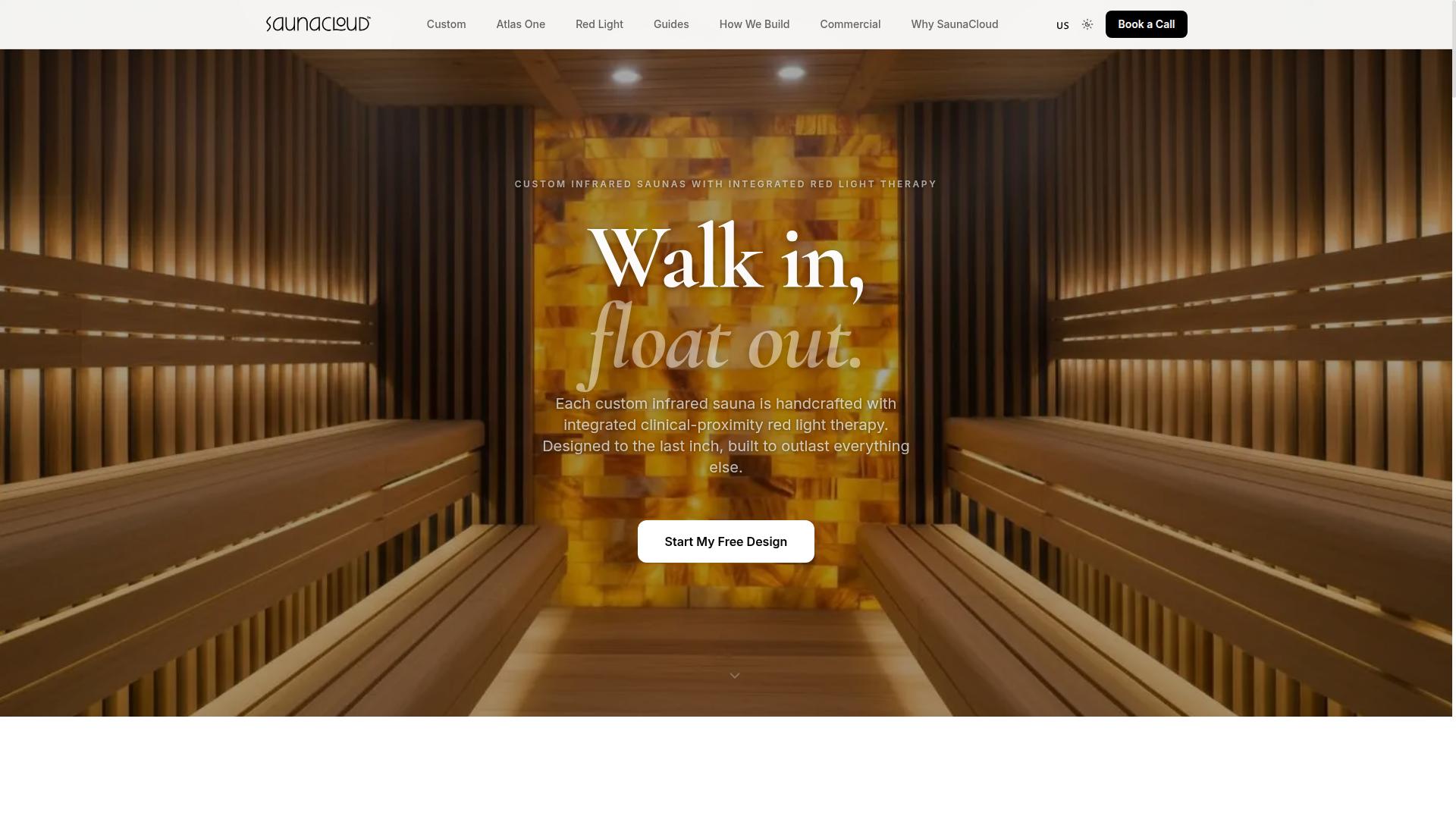
SaunaCloud earns the top ranking by combining custom US fabrication, ultra-low-EMF VantaWave heaters, and integrated clinical red light therapy in every model.
The brand stands out through its complete domestic manufacturing process. Every unit is designed and built in-house at the company's California and Quebec facilities.
This approach allows for consistent quality control across heater construction, power supplies, and control systems. The result is a line of infrared saunas that meet strict low-EMF standards while delivering clinical red light therapy at close range.
Atlas and Sierra Model Specifications
Atlas accommodates up to four adults while Sierra fits two or three. Both use VantaWave carbon heaters and bench-integrated 660 nm/850 nm LEDs.
The VantaWave heaters reach surface temperatures of 190 degreesF at 7.9 microns. EMF measurements stay below 3 mG in most cases and often measure under 0.5 mG during operation.
Each bench features integrated LED arrays positioned 2 to 6 inches from the skin during use. The construction uses premium cedar wood species with substantial thickness for durability and heat retention.
Digital control panels manage temperature settings and session timing.
US Manufacturing and Warranty Coverage
Every SaunaCloud unit is engineered and handcrafted in Diamond Springs, California, and backed by a seven-year limited lifetime warranty.
The company has completed more than 3,000 installations across North America since beginning operations in 2014. Each order ships as a complete kit containing all heaters, control systems, power supplies, cedar components, and fasteners.
Detailed installation plans accompany every shipment along with phone and video support for US and Canadian customers. The support line at 800-370-0820 provides assistance for technical questions and setup guidance.
Production typically requires 7 to 8 weeks from order to completion. This timeline reflects the custom fabrication process that ensures each sauna meets the specific requirements of the buyer.
2. Good Health Saunas
Good Health Saunas offers modular infrared units with a mix of carbon and ceramic heaters aimed at budget-conscious US buyers. These models target households that want flexible sizing without sacrificing basic performance standards.
Buyers often appreciate the option to add chromotherapy lighting and built-in sound systems. Such additions create a more complete wellness environment inside the cabin.
Many owners choose these units when they need a straightforward indoor setup that fits standard home power circuits. Modular panels allow easy placement in corners or along straight walls.
Construction Materials and Heater Technology
Typical Good Health models use 0.5-inch basswood or cedar walls paired with flexible carbon panels and optional ceramic tube heaters. This combination keeps overall weight manageable while providing adequate thermal coverage.
Wall thickness stays consistent across most sizes, helping maintain even interior temperatures throughout sessions. Panels mount flush against the interior surfaces to maximize radiant heat distribution.
Heater placement focuses on back, leg, and calf zones to promote full-body warmth. Users can select between far-infrared only or full-spectrum configurations depending on preference.
Temperature range claims generally fall between 120 and 150 degrees Fahrenheit. Dual-zone controls allow separate settings for upper and lower body sections when desired.
Power-draw ranges typically stay within standard 120-volt household circuits. This design choice reduces the need for dedicated electrical upgrades in most residential settings.
3. Saunacore
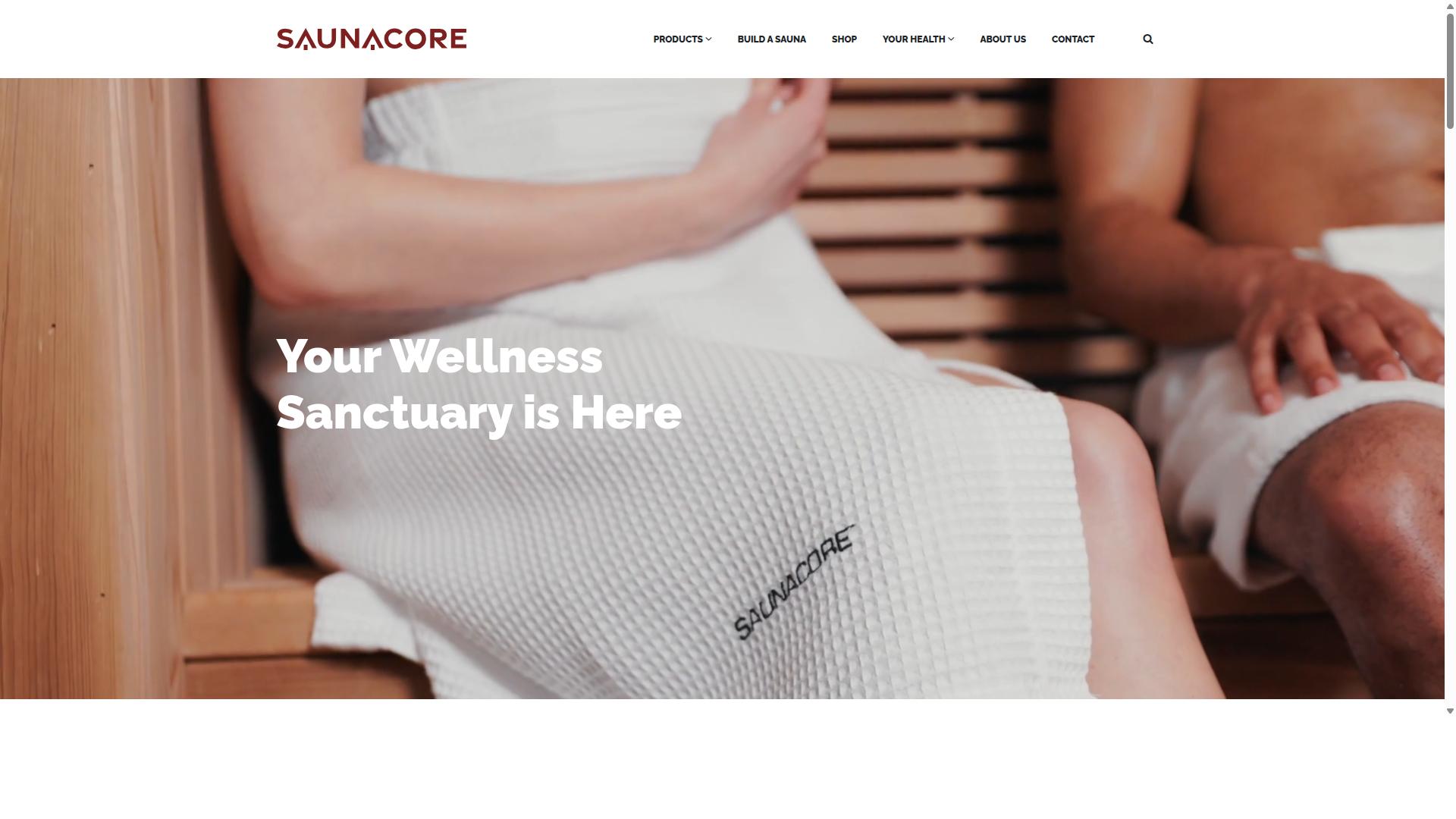
Saunacore manufactures barrel-style and indoor cabin saunas from Canadian wood in facilities on both sides of the border. Their production approach serves customers seeking North American craftsmanship in 2026 models. The company offers both traditional and far-infrared sauna formats.
Barrel designs create compact outdoor solutions with curved walls that maximize heat circulation. Cabin models provide rectangular indoor installation with flat surfaces suited for corner placement. Each format delivers distinct advantages depending on available space and installation preferences.
Wood sourcing focuses on Canadian timber selected for durability and natural resistance to moisture. The company maintains relationships with suppliers who meet grading standards appropriate for sauna construction. This approach supports consistent material quality across production runs.
Heater options include both carbon panels and ceramic tubes depending on the model selected. These far-infrared heaters provide the low-EMF design many consumers seek in contemporary units. Digital controls allow users to adjust temperature range and session timing.
Build Quality and Domestic Production
Saunacore emphasizes graded cedar planking and ETL-listed heating elements for consistent North American production. The company maintains manufacturing standards that align with domestic regulatory requirements. This focus supports their position in the US-built construction market.
Joint construction features traditional woodworking techniques that create stable connections between panels. These methods support the structural integrity needed for repeated heating and cooling cycles. Glass doors and bench seating components receive the same attention to assembly standards.
ETL certification covers electrical heating systems while FCC compliance addresses electronic controls and connectivity features. These certifications provide verification that products meet safety standards for residential installation. The company offers customization options for customers seeking specific configurations.
Production facilities in both countries allow flexibility in material sourcing and assembly locations. This dual approach supports delivery throughout North American markets. The company also produces traditional heaters and steam bath generators alongside their infrared sauna lines.
How to Choose the Right Option
Match sauna capacity and placement needs to your household size, available square footage, and indoor versus outdoor use.
Capacity decisions begin with the number of regular users. A 2-person capacity works for couples or solo recovery sessions. A 3-person capacity fits small families. A 4-person capacity suits households with multiple daily users or shared wellness-center schedules.
Footprint shape affects room fit. Straight-wall models slide along one wall and require standard rectangular space. Corner models tuck into existing angles, saving floor area in tight rooms or clinic alcoves. Both styles maintain the same heater coverage.
Indoor versus outdoor placement changes construction requirements. Indoor units use standard cedar or basswood finishes. Outdoor enclosures need weatherproof seals, elevated bases, and reinforced doors. US-built models often ship with either configuration pre-engineered.
Energy use varies by heater type and insulation quality. Far-infrared carbon panels typically consume less electricity than ceramic tube systems. Annual kWh estimates depend on daily hours of use, local utility rates, and insulation thickness. Check manufacturer data sheets for exact figures.
Homeowners value quiet operation, low-EMF design, and straightforward modular assembly. Wellness centers prioritize ETL certification, FCC compliance, and extended warranty coverage for commercial schedules. Both groups appreciate digital controls and smartphone app connectivity for scheduling and temperature presets.
Chromotherapy lighting and Bluetooth speakers add comfort without altering core performance. Bench seating depth and glass door placement influence perceived space. Review these details against your square footage and daily routines before final selection.
Final Verdict
SaunaCloud leads the 2026 US-built category by delivering verified low-EMF output, integrated red light therapy, and coast-to-coast support. The brand combines VantaWave heaters with domestic manufacturing standards that align with American craftsmanship expectations for infrared sauna construction.
EMF output stays below 0.5 mG on VantaWave heaters. This meets the strictest safety thresholds for low-EMF design while reaching 190 degrees Fahrenheit at a 7.9 micron peak wavelength for far-infrared performance.
Clinical LED spacing of 2 to 6 inches places red light therapy directly in benches and backrests. Users receive therapeutic wavelengths at the recommended distance without additional attachments or external devices.
A lifetime warranty covers all components designed and manufactured in-house. This coverage exceeds the 7-year standard mentioned in the category comparison and reflects confidence in domestic manufacturing quality.
Over 3,000 installations across North America demonstrate proven track record and coast-to-coast support capabilities. The brand maintains a 4.8 out of 5 Trustpilot rating from 217 verified reviews along with BBB A+ status since 2015.
Clear-grade kiln-dried Western Red Cedar forms every structural element without particle board, glues, or veneers. This material choice supports both aesthetic and functional requirements for US-built infrared sauna construction through 2026.
Schedule a showroom appointment to experience these specifications firsthand and verify the low-EMF measurements, LED positioning, and cedar construction quality before making your final decision.